Tuesday, March 18, 2014

Thursday, March 13, 2014
Tuesday, March 11, 2014
Incredible Color Photographs of Early 20th Century Russia
Check out these beautiful early 20th C. color photographs from Russia by Sergei Mikhailovich Prokudin-Gorskii.

The collection is housed at the Library of Congress. Click here to see the rest and learn more.
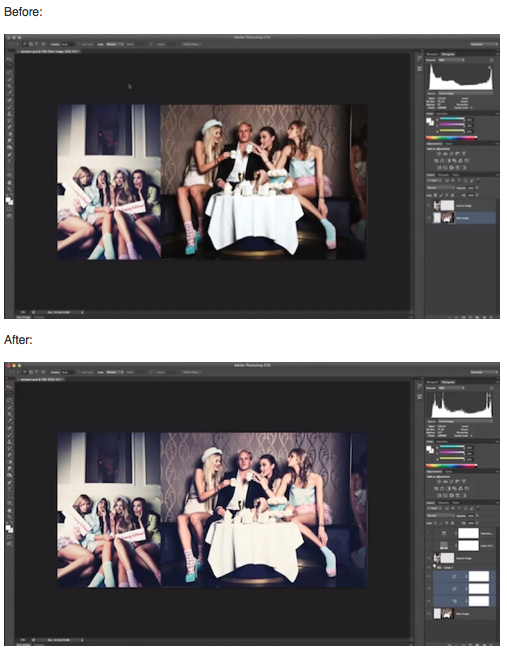
Great tip to correct color casts in your photos
This short video shows you how to use color theory to correct color casts. It's a great idea and quite easy to do.

Monday, February 3, 2014
Lighting 101
Very cool lighting tutorial with minimal gear - and minimal budget - from Strobist (with free PDF download 2.7mb).

Wednesday, January 1, 2014
Contemporary Photo Practice and the "Networked Lens."
Here's an interesting read on contemporary photo practice and the (possible?) paradigm shift to "networked lenses" as a (the?) new definition of the medium.

Sunday, December 1, 2013
Who's talking about photography and literacy?
Check out this interesting blog post by Marvin Heiferman addressing the ubiquitous presence of photography in contemporary culture -- and the lack of conversation about what all of that activity could potentially mean.

Is academia addressing the changing practices in the medium and associated photo-literacy? Is the language of photography destined to a fate similar to Latin: assimilated into many other languages and rendered irrelevant on its own (except, of course, for academic study)?
This post by Charlotte Cotton from the Aperture blog addresses a related topic: Are institutions (schools, galleries, museums) addressing innovations in photography?
Is academia addressing the changing practices in the medium and associated photo-literacy? Is the language of photography destined to a fate similar to Latin: assimilated into many other languages and rendered irrelevant on its own (except, of course, for academic study)?
This post by Charlotte Cotton from the Aperture blog addresses a related topic: Are institutions (schools, galleries, museums) addressing innovations in photography?
Monday, November 4, 2013
Monday, October 28, 2013
Inside a Paparazzo’s Photography Bag: Cameras, Lenses and Pepper Spray
It is interesting how similar the paparazzo's motive is to the photojournalist's. Pay particular attention to what he has to say about lenses and "photographers" who do not know what they are doing (and how that affects the images they make).

Wednesday, October 16, 2013


Monday, October 14, 2013
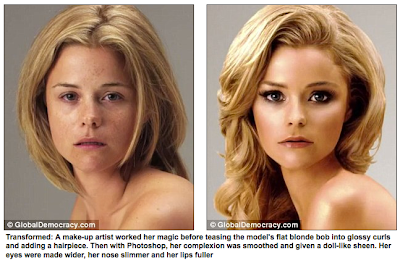
Photoshop Tutorial: Retouching Shiny Skin
Check out this video tutorial from Lee Varis. It's a rather technical explanation - but quite successful - and with some great smaller tips on retouching included.

Saturday, October 12, 2013
A great little video about lenses for photo and video
This is a nice and humorous video about important lenses that you should consider for photography and/or video. With regard to lens quality, you do get what you pay for - however, for many of the specific lens models mentioned (high end and expensive) there are often less expensive models of similar focal length. The "nifty-fifty" is a great example - they (50mm f/1.8) can be found for a little over $100 new - which is a fraction of the cost of the "faster" and more expensive models (50mm f/1.4 or f/1.2).

Wednesday, October 2, 2013
The First Photo
An interesting read about a quest to see where and how Niepce made his famous heliograph - credited as the first photograph ever.

Wednesday, September 18, 2013
My new self-published book now available on Blurb.
"A Salty Salute, 1992 - 1997" by Edward Stapel
I started making these photographs as a student at the University of South Carolina in 1992. After graduating, I continued photographing my friends, experimenting with various types of film and cameras. Around 1994, I began compiling the photographs with the idea of making an album. The project continued to evolve until I moved away in 1998, ultimately becoming two albums containing over 80 prints.
Revisiting these images over the years has always brought me joy. With that in mind, I decided to make this book, hoping others may enjoy seeing these photographs as well. I edited the two albums down to these 40 photographs. They are presented in loose chronological order, but are sequenced slightly differently than the original albums.
Many thanks to my friends who tolerated me and my cameras.
Available in hard cover and ebook formats.

I started making these photographs as a student at the University of South Carolina in 1992. After graduating, I continued photographing my friends, experimenting with various types of film and cameras. Around 1994, I began compiling the photographs with the idea of making an album. The project continued to evolve until I moved away in 1998, ultimately becoming two albums containing over 80 prints.
Revisiting these images over the years has always brought me joy. With that in mind, I decided to make this book, hoping others may enjoy seeing these photographs as well. I edited the two albums down to these 40 photographs. They are presented in loose chronological order, but are sequenced slightly differently than the original albums.
Many thanks to my friends who tolerated me and my cameras.
Available in hard cover and ebook formats.

Friday, July 26, 2013
The current state of digital photo printing.
Interesting article on the current options available for printing photographs.

Dig platinum printing? Dig this:
Dig platinum printing? Dig this:

Saturday, July 20, 2013
Can photojournalism survive in the Instagram era?
Nice interview with Fred Ritchin, discussing his new book, Bending the Frame (which I recommend, btw).
OUCH!: "In recent years the tendency has been to elevate the messenger over the message, a strategy which effectively keeps their more painful imagery at a distance. The courage of the photographer is celebrated while the circumstances of his or her subjects becomes somewhat secondary. As a result the photograph becomes less of a window onto the world and more of a mirror reflecting the distorted priorities of the culture consuming the imagery."

OUCH!: "In recent years the tendency has been to elevate the messenger over the message, a strategy which effectively keeps their more painful imagery at a distance. The courage of the photographer is celebrated while the circumstances of his or her subjects becomes somewhat secondary. As a result the photograph becomes less of a window onto the world and more of a mirror reflecting the distorted priorities of the culture consuming the imagery."
Wednesday, July 17, 2013

Subscribe to:
Posts (Atom)